Open in youtube for 360 degree view. Drag your finger on the screen to pan for a 360 degree view.


Avicennia with the pencil like breathing roots sticking out of the ground.


Rhizophora with the prop roots

The purpose of this engineered hexagonal design in the artificial pods is to:
- Attach pods together: Each side of the hexagonal pod has a hole to attach to other pods using stainless steel cable ties, allowing them to form larger, interconnected units.
- Increase stability and weight: Combining the pods into a larger triangular or linear unit increases their collective weight and stability, better anchoring the young seedlings in the sediment and resisting strong wave forces or currents common in coastal areas.
- Protect seedlings: The concrete structure of the pods is durable and designed to reduce wave energy and protect the young, vulnerable seedlings from physical damage during the critical early establishment phase, thus extending the window of opportunity for successful growth.
- Facilitate handling: The modular hexagonal shape allows for easier handling and deployment of multiple seedlings at once, which can be more efficient than planting individual seedlings, especially in areas with high erosion rates.
Natural mangrove propagules are typically long and pencil-shaped (e.g., Rhizophora species) or bean/oval-shaped (Avicennia species), designed by nature to float, disperse, and self-anchor in muddy ground, not for mechanical interconnection. The hexagonal shape is a practical engineering solution for the challenges of active coastal restoration.
Above explanation on why the pods are hexagonal in shape rom Google search.


There are many wild boars in the area. You can see one among the Rhizophora tree here:
There are increased human-wildlife encounters as many people attracted to the mangrove areas in Pulau Ubin.


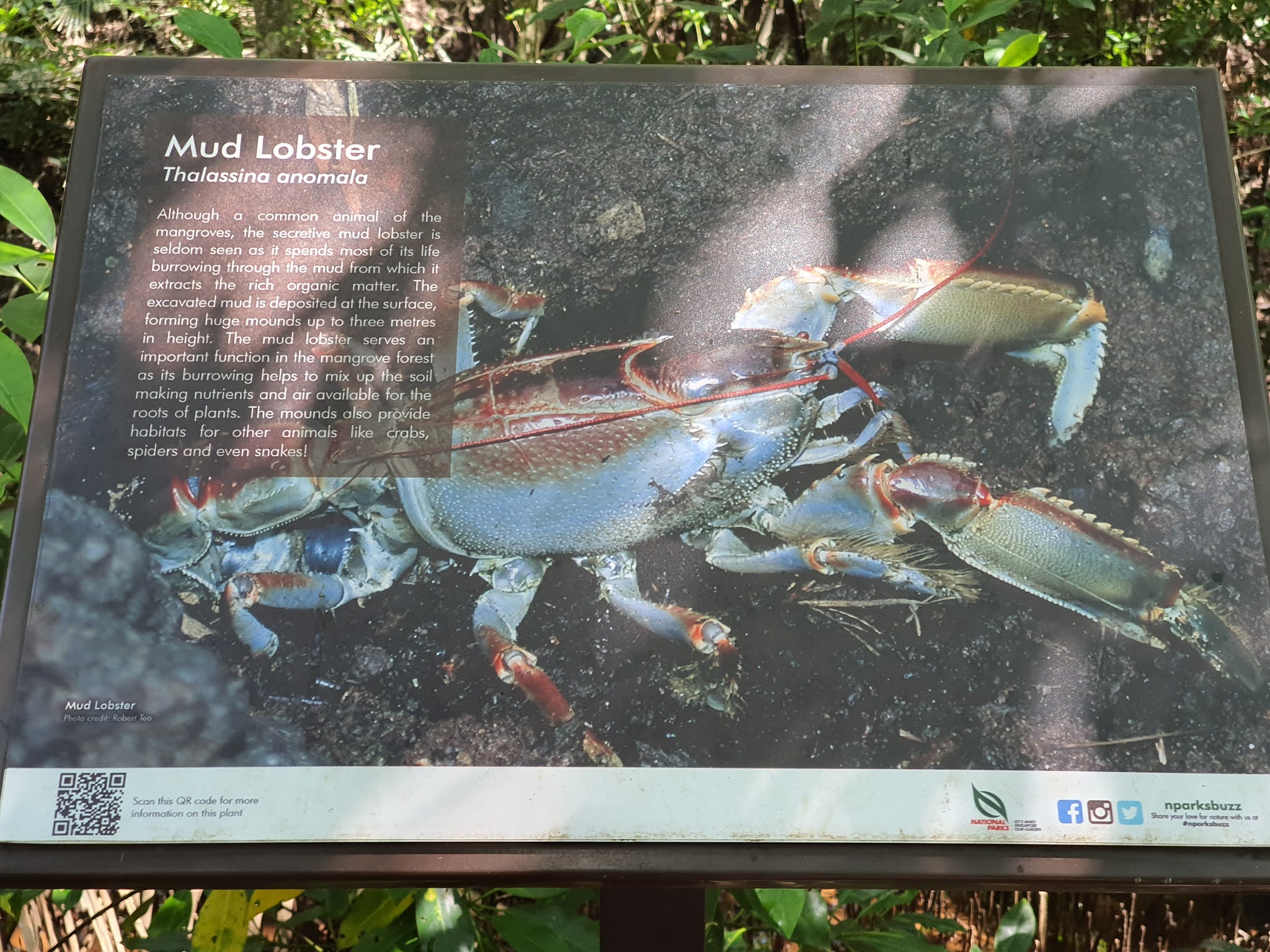
There are many mud lobster mounds near the start of the boardwalk.

The 20 m viewing tower called the Jejawi Tower near the entrance


Sonneratia mangrove near the jetty. It has a more rounded breathing root sticking out of the ground.


Avicennia (left) with Rhizophora

Rhizophora

Sonneratia near to jetty
Drag your finger on the screen to pan the photo for 360 degree view.

No comments:
Post a Comment